

Last Night in Soho: Edgar Wright and Krysty Wilson-Cairns talk their psychological horror film - barberowerew
Last Night in Soho: Edgar Wright and Krysty Edmund Wilson-Cairns speak their psychological repulsion film
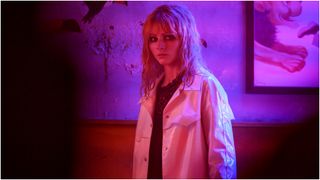
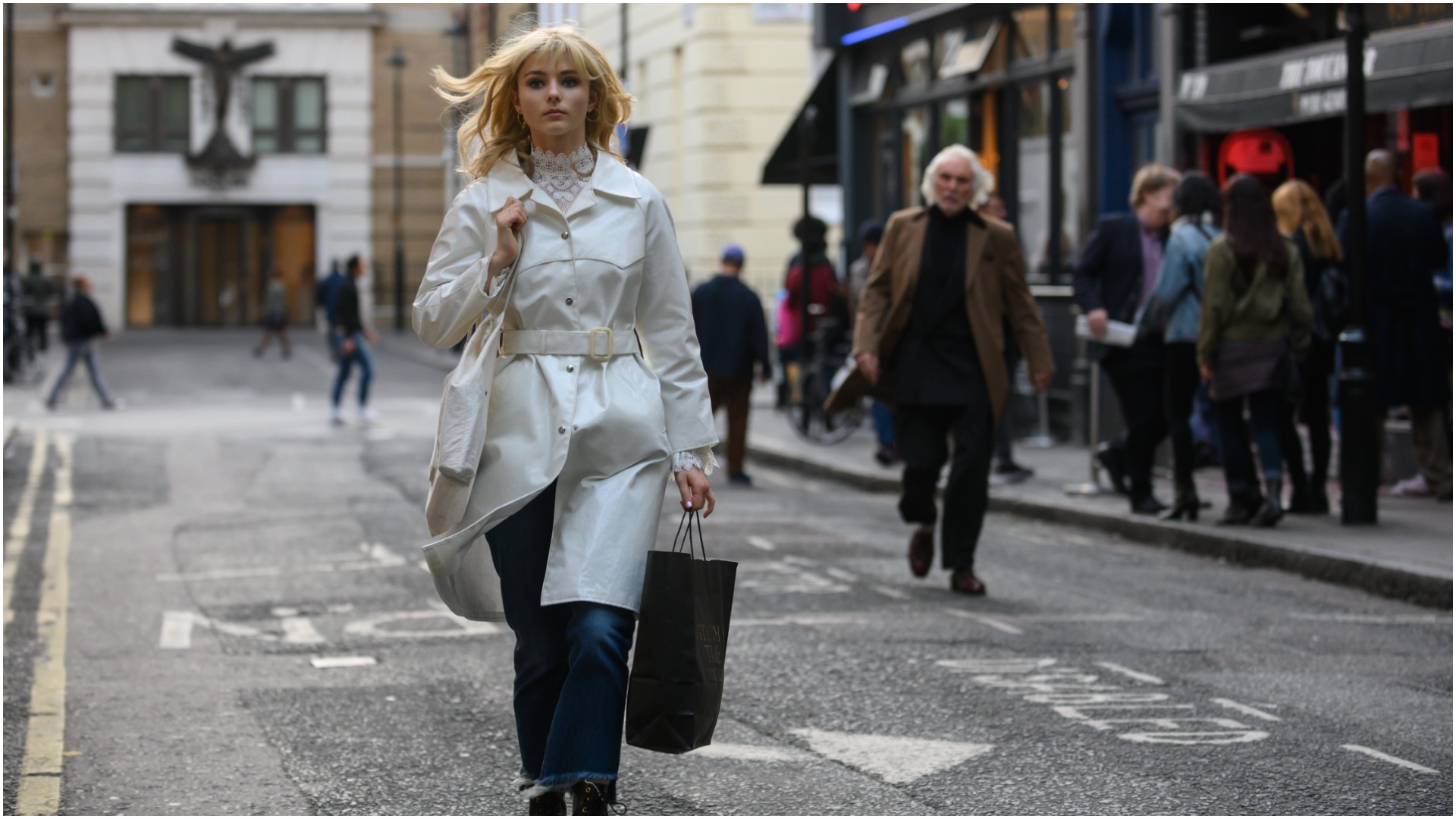
Last Night in Soho, the time-bending, psychological horror from director Edgar Wright, sees Thomasin McKenzie's Eloise arrive to London with astronomic dreams. A 1960s-obsessed fashion student, Ellie escapes from her bookman adjustment to a room in Soho, rented to her past Princess Diana Rigg's Miss Collins. There, she starts to suffer exciting dreams of the past, with Anya Taylor-Joy's attractive Sandie taking center stage, on with the sinister Jack (Matted Smith).
As Ellie waterfall advance into the past, the dreams – or are they hauntings? – get darker and much dangerous, spilling over into her real world arsenic reality and nightmare blur indistinguishably.
We Saturday down with director S. S. Van Dine and his co-writer Krysty Wilson-Cairns to talk around the movie, including what it was like to hearten the '60s in the heart of modern day London, the dangers of getting lost in nostalgia, and the film's feminist themes. Check into our conversation below, emended for length and clarity.
GR+: When talking to Unconditioned Film , Edgar, you said that Krysty beefed risen Anya Taylor-Joy's role as Sandie and added dialogue to her scenes. Could you both discuss what actuated that shift?
Edgar Willard Huntington Wright: The structure of the movie was the Same, but originally, I had this idea that the '60s sequences would be musical, just without dialogue. And and then when I started writing the screenplay with Krysty, one of the first things that [she] aforesaid was, "To cave in love life with Sandie, like Eloise falls in love with Sandie, we really take to hear her speak and plump out that character." So, that's what happened. That was the big, major change that happened to the screenplay, that the '60s scenes had dialogue. And I'm so glad they did, because [they were] my favorite bits to write with Krysty.
And so in the course of that, those scenes expanded and I think it was [Krysty's] prompting of having the audition scene. Once the Sandie part was getting bigger, in my head, I started to alteration who I wanted Anya to play, because in the beginning, I had talked to her about playing Eloise, even before the screenplay was written. And as the Sandie character got bigger and more detailed and had much scenes, I thought "Oh, Anya Taylor-Rejoice should shimmer Sandie instead."
Krysty Wilson-Cairns: Information technology was so important to Maine, Eastern Samoa once upon a clock time I was a young woman, and the women that I would become obsessed with or want to be or want to read about – IT wasn't close to how they looked or how they sick. It was about their confidence and their attitude and their ambition and their parkway. And I thought, to get that, you need to have dialogue, so it was very much from a fictional character-driven place. And I'm glad we did because I think [it] allows those characters to in truth mirror each other and then you reach see what Ellie is then heroic for, this confidence, which at 18, and tranquillize even at 34, I would like Anya Taylor-Delight's confidence. [Laughs]
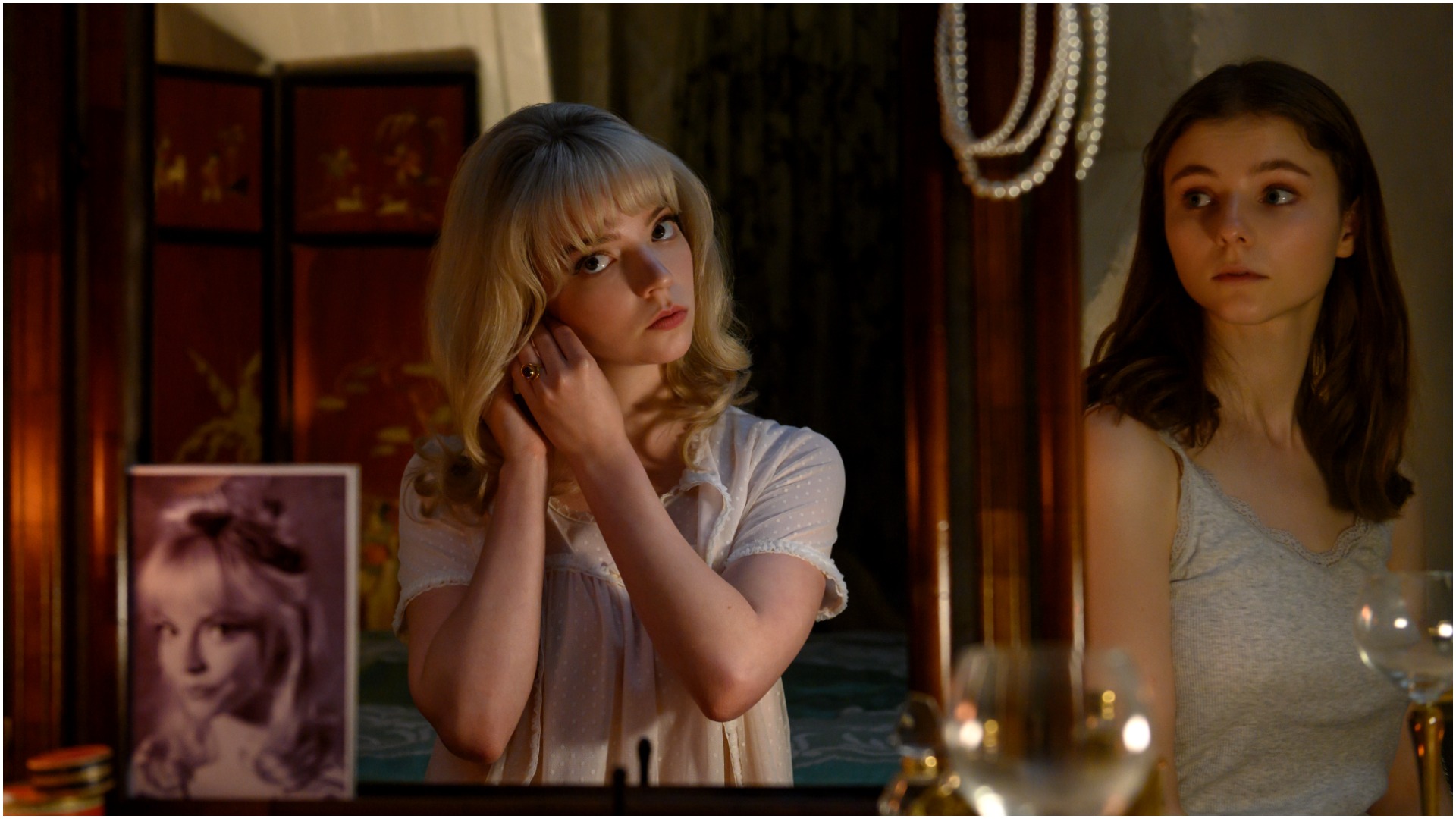
Edgar, what prompted you to go away from the more than upbeat and comedy feel of your previous movies to more of a science repulsion? It does feel like a natural direction, but what caused you to finally score that jump-start?
EW: I think it's being 47 and spending overmuch time in London. [Laughs] No, I have a dear affair with the City, I lovemaking London, I live here. Just it's a place where pleasing and bad coexist each day. IT's something where, some of us [have spent] so much time in SoHo over the long time, both life and working. And it's a place that's powerful, in it's as dark as it is fun sometimes, and some people ne'er think about those sides to it, both in the past operating theater in the modern-day. Pine Tree State and Krysty think nigh that very much. It's something where you're trying to deal with the ghosts of the past on a daily basis. The movie is about the idea of nostalgia and if you'Ra obsessing about decades that you never lived in, what is that really about? Is that your failure to deal with modern life, if you're constantly thinking about these good old days that maybe don't actually exist? What is that? Is that something where you're retreating from the modern global? I promise I'm fun personally.
Talking of nostalgia, the film really does show how alcoholic it can be. Was that e'er there from the start? Or did that develop as you were going through the chronicle?
EW: Information technology was kind of the point of the movie. Listen, I'd be mendacious if somebody same to me, right now, would you ilk to time go off back down to the '60s? I'd embody like, 'Oh, yeah.' I'd make sure I had the rightfulness money. Simply, of course, you can't have the acceptable without the bad. It's non like that information isn't out there, or wasn't at the time in literature and the news and culture at the time. As you get further away from a decade, the tendency is to entirely romanticize information technology and think out but about the good times. And in some cases, the good times that you take heed about in the '60s, like the Rolling Stones and the Beatles at the Ad Lib Club hanging out with Princess Margaret, that's besides retributory the round top one per penny. [Laughs] The cool put off, not the rest of London, operating room the suburbs, rent alone the rest of the country. It's that matter of just trying to basically have a Thomas More sounded response to the idea of everything was unfriendly stake in the '60s.
You were working with Diana Rigg and Terence Pestle – what was that like? Are there whatsoever moments or memories from the set that you'll ever remember, operating room any stories that they told?
EW: It was amazing to have Publius Terentius Afer, Diana Rigg, and Rita Tushingham as fit, who are all '60s icons – but I don't know whether they think of themselves as '60s icons. In a similar way, in the movie, where Eloise talks to at least two characters who were around at the meter, with this empty-headed, puppy dog-ish enthusiasm about the decennary, I've certainly been like that with people. IT's different for people who were there because they remember it all. It's sort of the point of the movie. And, Diana and Rita and Terence would give their perspective connected the script, which was priceless, really, to have them comprise there. I showed it to Rita Tushingham the unusual day, and she real loved it. But my start question was, 'Did we get the '60s gorge right?' [Laughs] She was thither as an 18-class-old prima, not dissimilar to Thomasin McKenzie now. It's amazing.
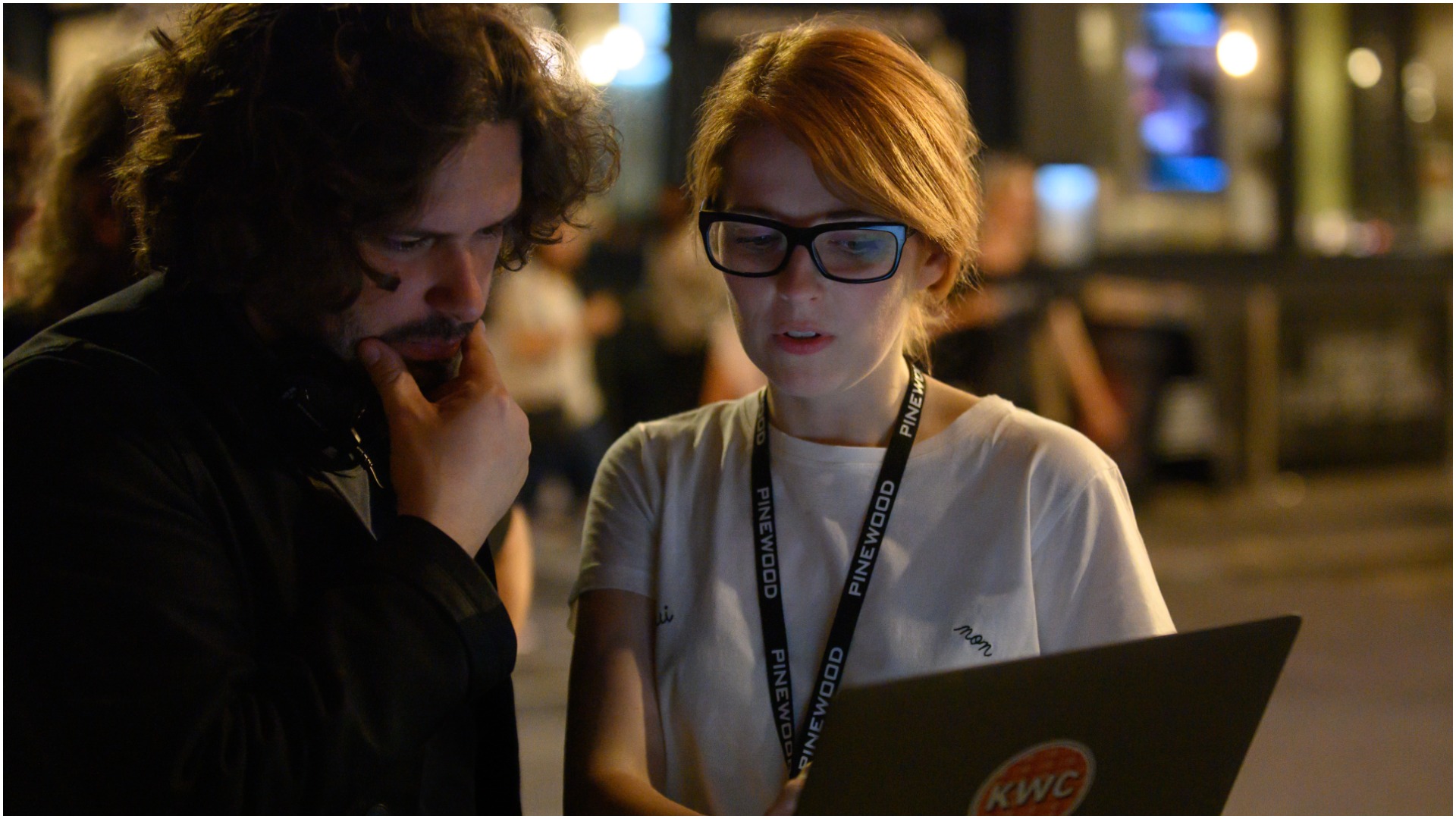
A lot of the time, Ellie and Sandie are literally reflections of each other, or we see Ellie trapped behind a mirror, watching Sandie, and nerve-wracking to reach out. Could you some talk about the purpose of mirrors in the film?
EW: The idea is the terror of going back in time – what if you went back in time, simply you couldn't do anything, you were simply an observer? You're non Marty McFly, you can't fling back to the '60s and change the future, you can only watch. At first, it's quite an intoxicating thing to witnesser and be a voyeur and eavesdrop on these private scenes. But then as things take a change by reversal for the worsened, and your lead character is powerless to avert these events, then it becomes actually bloodcurdling.
KWC: And the mirrors, I was forever amazed getting to go on set, or even in the writers' room when Edgar would talk me through how some of this mirror stuff was going to happen. The thing I likable most about it was information technology all stems from their characters, right? Sandie and Eloise are mirrored and, okay, that mirror is not always a true reflection for Eloise, but it's who she wants to live, who she wants to see in the mirror, until information technology's not who she wants to see in the mirror, and then she can't interpret anyone else. And I just intellection the in-camera effects and trickery and the choreography – to get to witness that was wild, especially knowing, obviously with Edgar and the awesome cast and the incredible crew, that it was just driving the story. Information technology wasn't done simply because 'Hey, this is awing we sack practise this,' it was done to unlock the ticker of those characters, which I think is concrete filmmaking.
Very much of research has been done for this movie. When you were researching the past, was there anything really surprising that you found, or anything you desirable to incorporate into the moving picture that you couldn't?
EW: I had so much amazing research cooked away Lucy Pardee and I actually reread some of it the other twenty-four hours, because it was this enormous telephone directory tome. I asked to research every single section of the movie, not just people who lived and worked in SoHo then, people who live and work in Soho now, from all walk of lifespan. And students coming to London, and people who have sleep paralysis visions. It's almost like there are probably 20 movies in that search. I'm kind of cautious to reveal anything in case it inspires a different hand.
Eloise's dreams in the film literally do address nightmares, and the hauntings get more and more than utmost the deeper she goes into the past. You've talked approximately the nostalgia element and the dangers of romanticizing the past, but is this also a scuttlebutt on the dangers of dreaming too more than and not thoughtful to the mankind around you? Because thither's n constituent of 'be careful what you wish for' in the movie.
EW: Yeah, I think what you said is incisively it, there is that element where if you are thinking about the recent too much, is that a bankruptcy to deal with the award solar day? Or are you withdrawing from modern life to think about [the past]? I think I do that, and I guess that's one of the inspirations for the script, is that I would think a great deal about the idea of traveling back in time and then would go to question wherefore I was doing that.
KWC: I encounte IT's peradventure also close to the bone to say be careful how untold prison term you spend dreaming, because my job is to literally pose and fantasize and work stuff out. And I suppose yea, I probably fix problems in the scripts better than I fix problems in my lifespan, so information technology's a cautionary tale for everyone WHO does that American Samoa well.
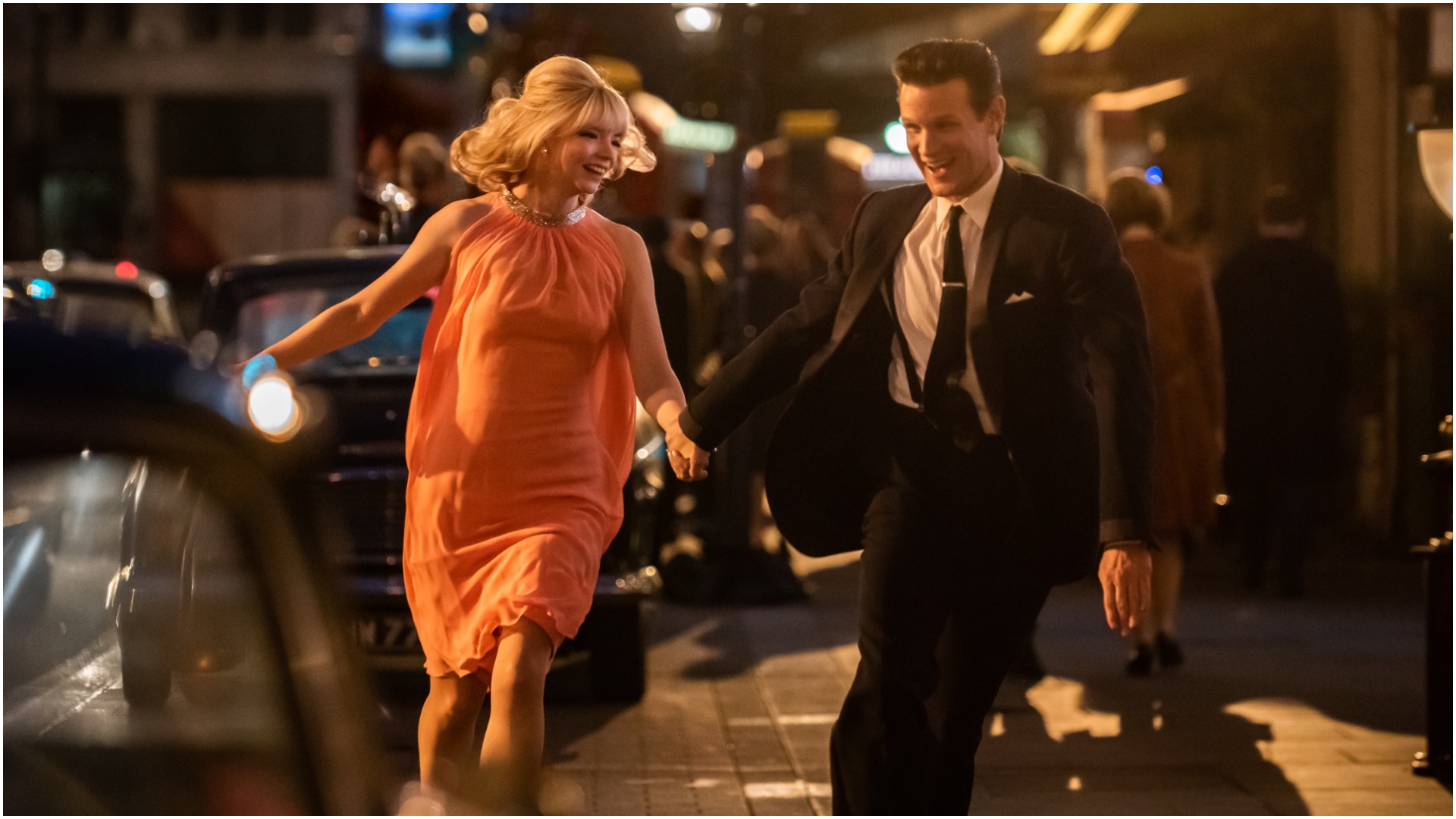
There are much of undreamed of scenes that strike place in the '60s, like the elephantine set piece with Ellie crossing the street. What was information technology like recreating the bygone like that, and being there in that moment?
EW: It was real white knuckle joint stuff. IT was amazing, and it's a testament to my location section and production department that we were able to pull down it off. Information technology was every last natural event, you wealthy person united night to do it, information technology's Sunday night, 10:30pm [to] 2:30am. That's as much time atomic number 3 the City of Westminster will give us, so it's like 'We better get it right.' It's amazing during that scene, where we couldn't rehearse on the true street because it's the Haymarket, which is one of the busiest parts of London, so we had to rehearse on an flight strip with Thomasin McKenzie so we could work it out with the cars and everything, thusly she wouldn't get run over by whatsoever time period cars and a period bus, a tangible one. We did a lot of dry run in a different location and then had to put on that to the Haymarket in the quatern hours that we were acknowledged. That was a really ambitious shot, and I'm amazed that we pulled IT off. And then there are other shots later in the movie, ilk when Matt Kathryn Elizabeth Smith and Anya Taylor-Joy are driving up Frith Street, which, if you don't know London, is like the heart of Soho. As you probably love, there's nobelium Nox where Soho is not laboring. So information technology was really ambitious gormandize to seek. I'm really snot-nosed of the fact that everything that we nip in Soho was really in Soho and non faked somewhere else.
The movie has a strong feminist feel as well. How did that explicate equally you were devising the movie? Was that another matter that you were very focused on all the way through with?
EW: I guess information technology was always on that point in the news report. It's uncheckable, especially for me, to sit kill and attribute some of those themes to it, because it's intrinsical in the story that we were cogent. In a way, I guess one of the inspirations [is] that I e'er found it quite curious that there are a lot of '60s movies, where young women were chastised for the audacity of inadequate to make it plumping. And there's a lot of those movies in the '60s where it felt the likes of the older generation was slapping the radiocarpal joint of the jr., progressive generation. And at that place are some very good movies made at that time, and a good deal of ones that are very sexy and sensationalistic and moralistic, and I always intellection that was in truth curious and a bit dark, and sol it was an attempt to comment on it by twinning that with a new narrative Eastern Samoa well.
KWC: There's the assumption that I came on board and somehow ready-made it about women, but that was in the rank Desoxyribonucleic acid of the story. To thin his blushes, Edgar's improbably empathetic and force out see what it's like for someone outside his undergo. And too, your producer is a fair sex, most of your team are female. So it wasn't necessarily upcoming from right a singular male perspective, it was already a very built story nigh what it was like for these two women to journeying through their unshared metre periods. I didn't add that, that was there.
Edgar, you've aforementioned that you gave everyone in the cast a couple of movies to look out before filming Lowest Night in Soho. Do you some have whatever pic recommendations for the audience to watch ahead going in?
EW: I don't want anybody to finger corresponding there's required reading material before the movie. We essentially had an archive online, where in that location were 50 films or something, but it wasn't ilk you have to watch all 50. It was like, 'If you want to watch any films from the period, here are some.' I definitely spindle-shaped Anya and Thomasin in the direction of some films that I thought would be right-hand. Both Matt and Anya, and Thomasin, they all watched Ken Loach's Poor Cow, which features Publius Terentius Afer Stamp. Whatsoever of those movies that are very representational are a good way of life of seeing the period as it very was rather than necessarily what you see in movies. Because, patently, movies of the time are a bit more of a heightened style. Some of it was just reference for the costume department and the production project department, operating theater for Anya to determine some films with actresses of the time, like John Arthur Schlesinger Jr.'s Dear with Julie Christie is a great example.
But [I'm] forever cautious doing too many recommendations because sometimes I smel that masses say 'Oh, what films should I watch to get ready for Last Dark in Soho?' And I was the like, 'Well you don't have to truly watch anything.' [Laughs] If you like the moving-picture show, watch them afterward as further meter reading. But I don't finger there should be any required reading before the movie.
Krysty, you'rhenium working with Taika Waititi on Star Wars, and He's said he's got the story ready. Did you take anything on your experience in this movie into writing on that project? And is it maybe something unexpected?
KWC: I can't say anything about Star Wars or Mickey Mouse wish fare in hither and kill me. I'm afraid of him. So No, I'm so sorry, I terminate't tell anything. I can only say that working on this as a writer was much an incredible see to learn filmmaking from an absolute master.
And Edgar, are you calm down working on The Running Man?
Electronic warfare: I can't say anything about it because Mickey Mouse, who is not convoluted in the project, will too kill Maine… Occasionally, I learn from my mistakes. And one of them was speaking about a fancy that hadn't actually been made yet. And aft I didn't actually make the picture show I thought, 'Ah, so annoying that on that point are all those interviews out there about me talk about a movie that I didn't make.' So I decided 'You know what? In future, wear't public lecture just about movies where you haven't shot a single physique eventually.'
Last Night in SoHo releases in cinemas this October 29. For everything else the next few months have future for us, insure out our guide to all the upcoming starring movie eject dates.

I'm a freelance Amusement Writer here at GamesRadar+, masking all things film and Idiot box for our Absolute Celluloid and SFX sections. I previously worked on the Walter Elias Disney magazines team at Immediate Media, and also wrote connected the CBeebies, MEGA!, and Star Wars Galaxy titles after getting my BA in English.

Source: https://www.gamesradar.com/last-night-in-soho-edgar-wright-interview-krysty-wilson-cairns/
Posted by: barberowerew.blogspot.com
0 Response to "Last Night in Soho: Edgar Wright and Krysty Wilson-Cairns talk their psychological horror film - barberowerew"
Post a Comment